Top Chemistry AI Tools Recommended for Smarter Learning
TL;DR: Chemistry AI tools simplify complex reactions and equations by providing step-by-step explanations, molecular visualizations, and instant feedback. GoMim Chemistry AI stands out as an all-in-one study companion offering an interactive, conversational approach ideal for learners at all levels. Other top platforms cater to different needs—some focus on quick problem-solving (like Gauth), others on deep conceptual understanding (like Julius AI), or academic writing support (like HyperWrite). Choosing the right tool depends on your learning goals. When used responsibly alongside traditional study methods, these AI tools can greatly enhance comprehension and confidence in chemistry.
If you have ever stared at a chemical equation, wondering how on earth those elements combine or why the reaction doesn't balance—you're not alone. Chemistry can be as puzzling as it is fascinating, and that's exactly where Chemistry AI steps in. With the right AI chemistry study tool, complex reactions start to make sense, and problem-solving becomes far less intimidating.
Today's intelligent chemistry platforms don't just calculate—they explain reaction mechanisms, visualize molecules, and walk you through each concept like a patient Chemistry AI tutor.
In this guide, we'll explore the most effective AI chemistry solvers, examine what makes them powerful, and help you choose the perfect study companion for your chemistry journey.
Why Use an AI Chemistry Tool?
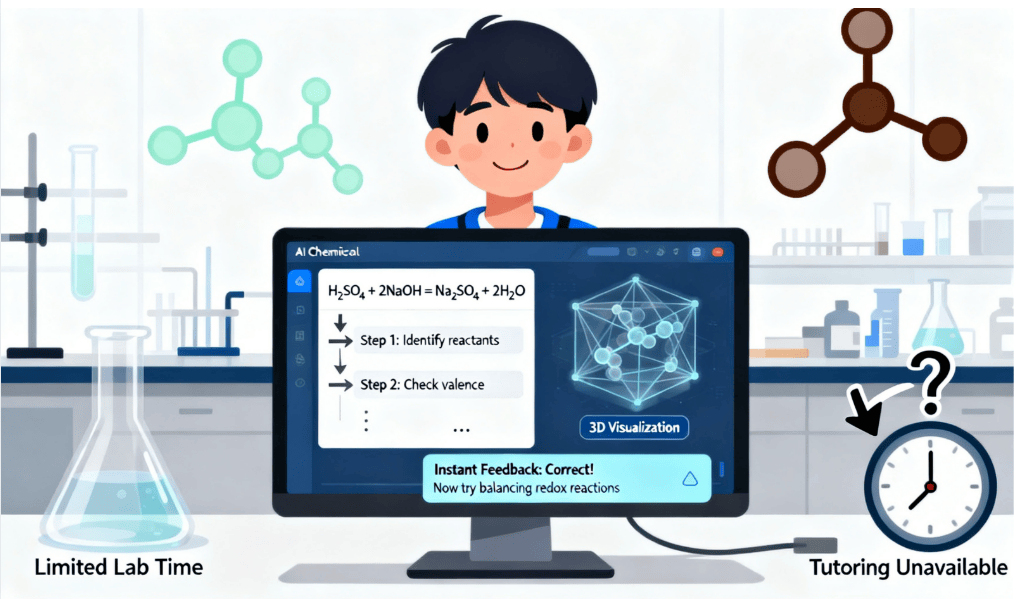
Chemistry is one of those subjects that beautifully combines logic and creativity—but it can also be deeply challenging. Many students find themselves stuck trying to balance complex equations, predict reaction outcomes, or visualize how molecules interact in three dimensions. Access to lab time is often limited, and human tutoring isn't always affordable or available when questions arise late at night.
Chemistry AI tools address these everyday learning gaps. A well-designed AI chemistry homework helper doesn't replace teachers—it complements them. It provides instant feedback, explains each reaction step-by-step, and helps learners recognize patterns in equations or molecular behavior. Some even generate 3D molecular visualizations that make abstract concepts easier to grasp.
By breaking complicated reactions into logical steps and connecting them with fundamental principles, AI chemistry tutors make studying more efficient and less stressful. The result isn't just faster answers, but deeper comprehension and confidence in solving problems independently.
What Core Features to Look for in a Chemistry AI Tool
Before choosing a Chemistry AI tool, it's important to know what features actually make a difference in your learning journey. Below are the most critical elements to evaluate.
Input & Recognition Capability
A good AI chemistry solver should recognize text, photos, or even handwritten formulas. Optical Character Recognition (OCR) and molecular structure parsing allow you to upload a photo of a chemical equation and receive a detailed analysis instantly. This makes it ideal for mobile and desktop learners alike.
Step-by-Step Explanation & Pedagogical Value
The best AI chemistry study tools don't just give answers—they teach. Look for platforms that provide clear reasoning, balanced equations, and conceptual insights. Some even connect steps with related chemical theories or reaction mechanisms to reinforce understanding.
Scope / Coverage & Specialization
AI chemistry tools differ in their focus and depth. Some function as broad academic assistants, covering subjects beyond chemistry, while others are built specifically for chemical studies. Specialized AI chemistry solvers often provide stronger performance in areas like organic, inorganic, and physical chemistry, offering more precise explanations and reaction modeling.
Broader platforms, on the other hand, give learners flexibility across multiple disciplines. Choosing between them depends on your goals—whether you need an in-depth Chemistry AI tutor or a versatile study tool for several subjects.
Accuracy, Reliability & Error Sources
No AI system is perfect. Even top-tier AI chemistry solvers can misinterpret reaction conditions or molecular notations. Always cross-check results with textbooks or verified databases. Tools that continuously update their chemistry databases tend to be more reliable.
Use Case & Target Users
Consider your goals:
- Students benefit from tools that simplify theory and provide structured feedback.
- Researchers may prefer platforms that simulate reactions or calculate molecular properties.
- Educators can use AI tools to enhance classroom explanations.
Top AI Chemistry Tools You Should Know
For students, choosing the right Chemistry AI tool can make a major difference in how concepts click. After all, chemistry isn't just about memorizing formulas—it's about understanding patterns, reactions, and relationships at the molecular level. The best AI chemistry study tools act like patient tutors, helping learners grasp difficult topics step by step.
Each of the following Chemistry AI tools brings something unique—some excel in problem-solving, while others shine in explanation, visualization, or adaptive learning support.
GoMim Chemistry AI – All-in-One Study Companion
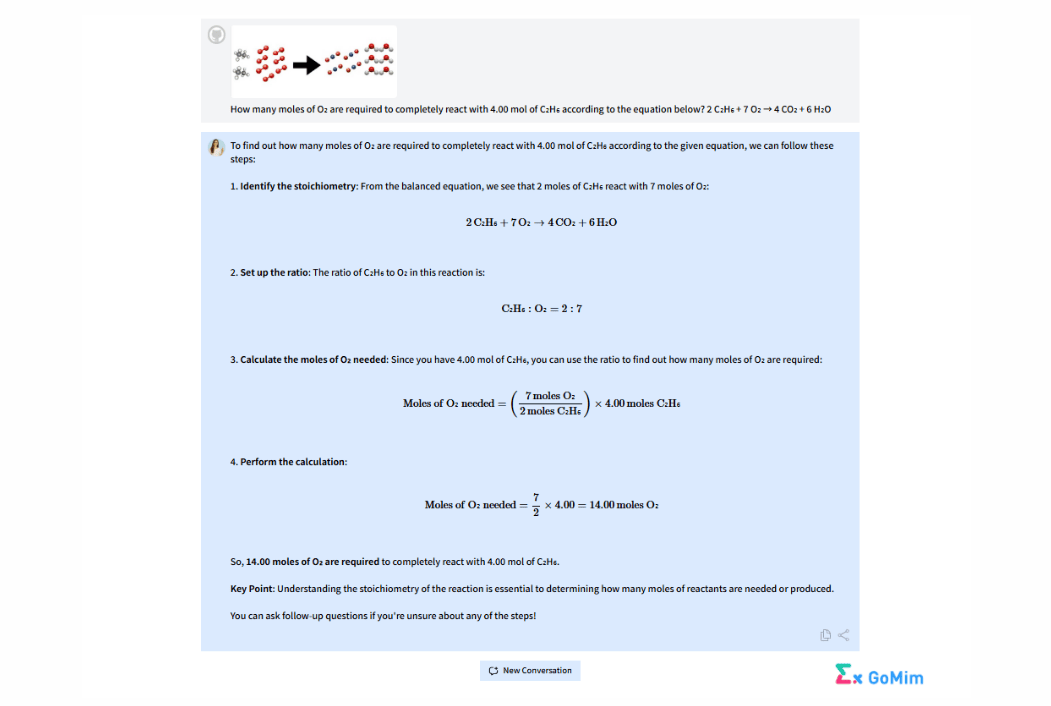
Overview: GoMim Chemistry AI is a powerful homework helper designed to make complex chemistry simple and approachable. It supports both text and photo input, guiding students through balancing equations, understanding reaction mechanisms, and exploring molecular structures.
Key Features:
- Step-by-step chemical equation solving
- Multilingual and cross-device compatibility
- Chat-style interface that mimics a real tutor
Strengths: Best for students seeking a conversational, interactive way to study chemistry across all levels.
Weaknesses: Currently focused on student learning—less suited for professional research.
Pricing: Free daily use with optional premium upgrades.
Gauth Chemistry Module – Quick and Accurate Solutions
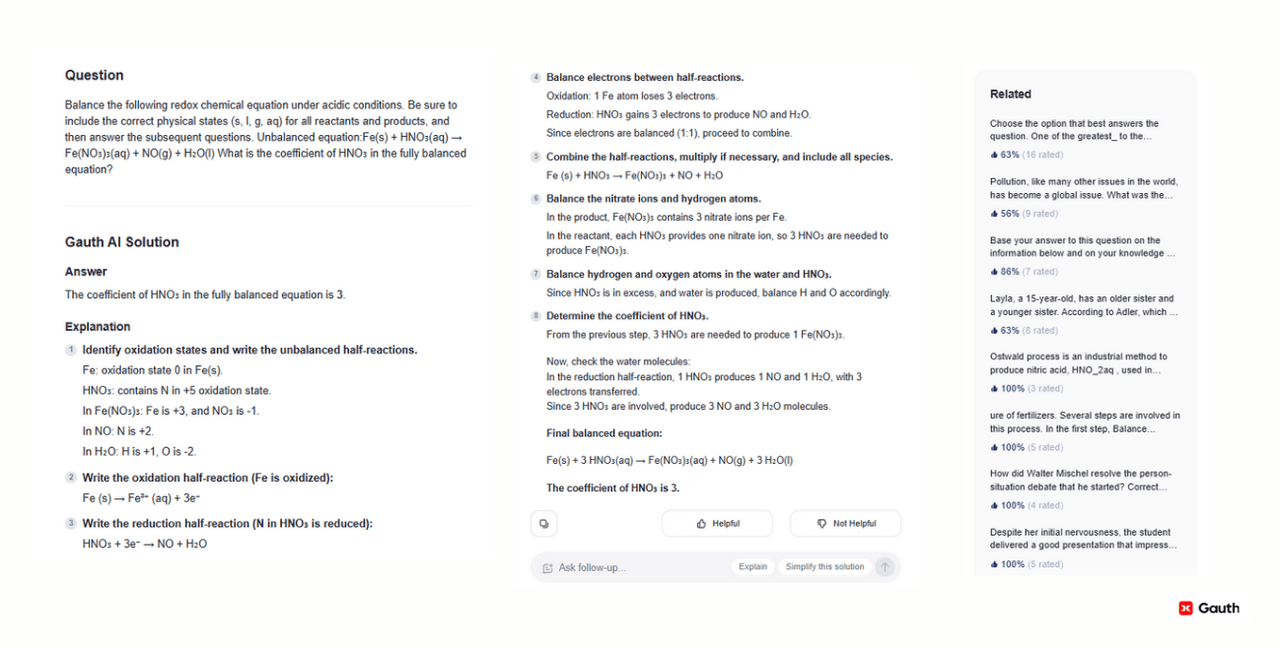
Overview: Originally math-focused, Gauth has expanded into a Chemistry AI solver capable of handling equations and reaction logic. It's fast, accurate, and accessible for everyday homework tasks.
Key Features:
- Photo and text input recognition
- Automated equation balancing and ion detection
- Step-by-step reasoning explanations
Strengths: Great for high school and early college students who need quick, reliable chemistry help.
Weaknesses: Provides limited conceptual depth for organic and thermodynamic topics.
Pricing: Free basic access with optional premium plans.
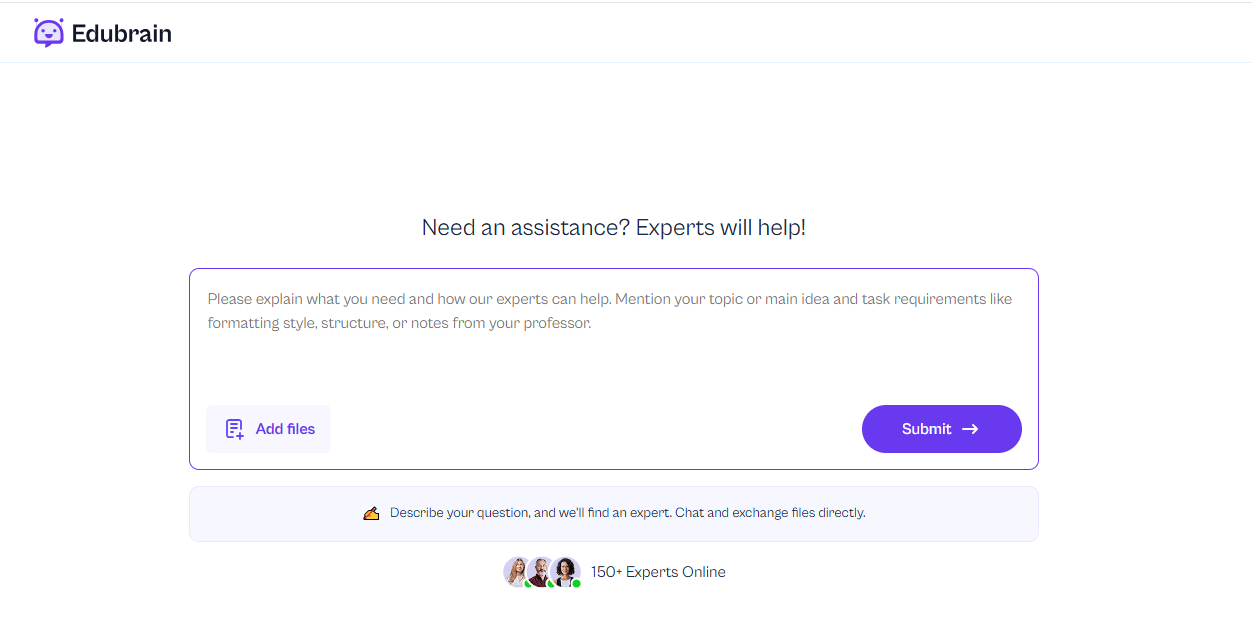
Edubrain Chemistry AI Solver – Conceptual Learning Focus
Overview: Edubrain emphasizes educational depth, combining smart AI analytics with interactive teaching modules. It helps learners grasp chemical reasoning rather than just final answers.
Key Features:
- Smart hint system for guided problem-solving
- Contextual teaching of reaction mechanisms
- Real online experts tutorting
Strengths: Excellent for building foundational understanding and classroom reinforcement.
Weaknesses: Less effective for advanced multi-step synthesis questions.
Pricing: Freemium with special educational plans.
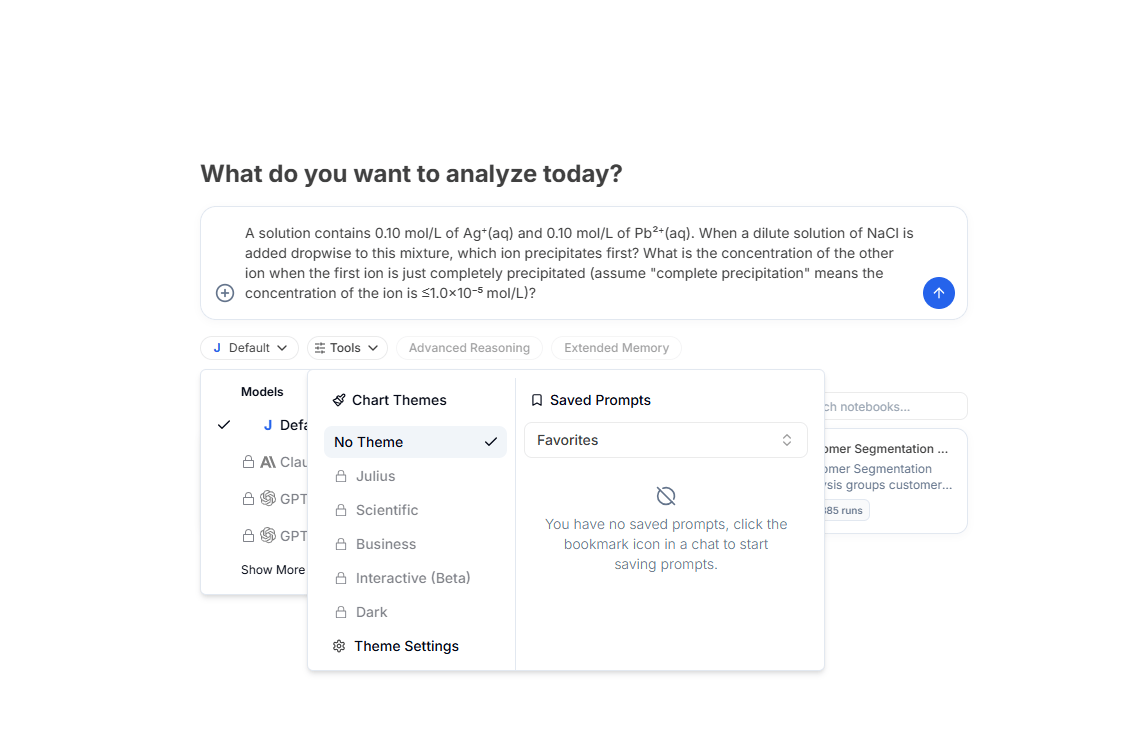
Julius AI Chemistry Solver – Deep Explanations for Advanced Learners
Overview: Powered by a GPT-style model, Julius AI is a conversational Chemistry AI tutor that provides in-depth reasoning. It can explain not only what happens in a reaction but why.
Key Features:
- Handles theoretical, lab, and quantitative chemistry questions
- Supports natural language interaction
- Breaks down complex reaction mechanisms
Strengths: Perfect for advanced learners and university-level chemistry enthusiasts.
Weaknesses: Requires clearly structured prompts for best accuracy.
Pricing: Free tier plus monthly premium options.
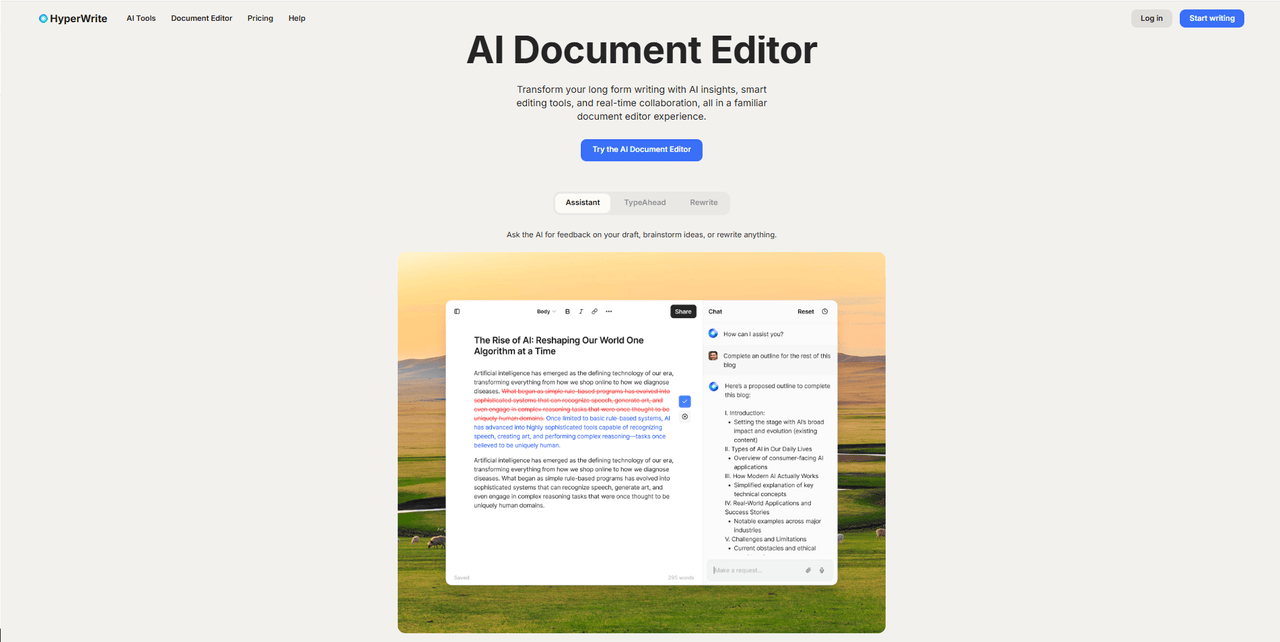
HyperWrite Chemistry Assistant – The Writer's AI Chem Partner
Overview: HyperWrite blends chemistry assistance with academic writing tools. It helps students craft lab reports, summarize reactions, and explain experimental methods.
Key Features:
- Generates lab report sections and chemical summaries
- Explains experimental methods in context
- Integrates with academic citation workflows
Strengths: Excellent for students writing chemistry papers or lab assignments.
Weaknesses: Not a traditional problem-solving solver—better for writing and comprehension.
Pricing: Free trial available; premium subscriptions for extended use.
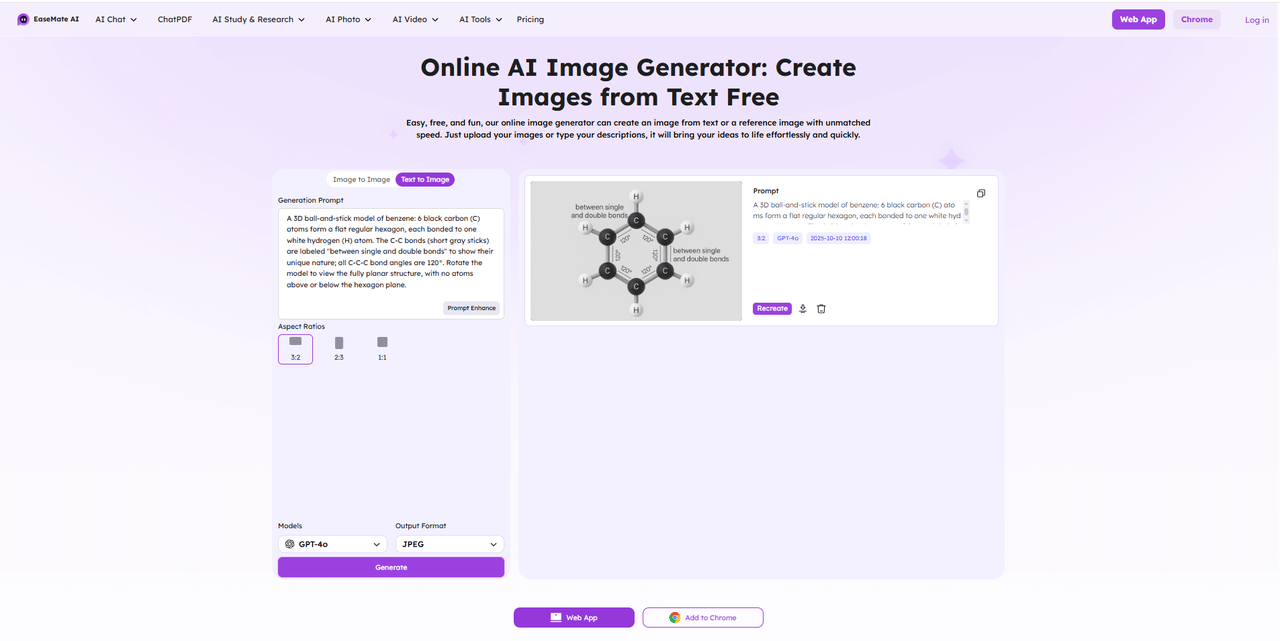
EaseMate AI Chemistry Solver – Visual Learning Made Easy
Overview: EaseMate stands out as a visually focused AI chemistry study tool. It lets users manipulate molecules and explore reactions interactively.
Key Features:
- 3D molecular visualization and bonding simulation
- Reaction prediction and product estimation
- Drag-and-drop interface for exploring molecular geometry
Strengths: Best for visual learners studying organic chemistry or molecular structures.
Weaknesses: Limited mobile accessibility and a lack of advanced numerical problem support.
Pricing: Free plan available; premium visualization features optional.
StudyMonkey AI Chemistry Tutor – Fun and Gamified Learning
Overview: StudyMonkey turns chemistry study into an interactive, gamified experience. Its Chemistry AI tutor offers quiz-based exercises and instant feedback.
Key Features:
- Personalized quiz sets for test prep
- Progress tracking and achievement badges
- Targeted review of weak topics
Strengths: Ideal for test preparation and active recall practice.
Weaknesses: Less focus on detailed theoretical explanations.
Pricing: Free to use with optional in-app upgrades.
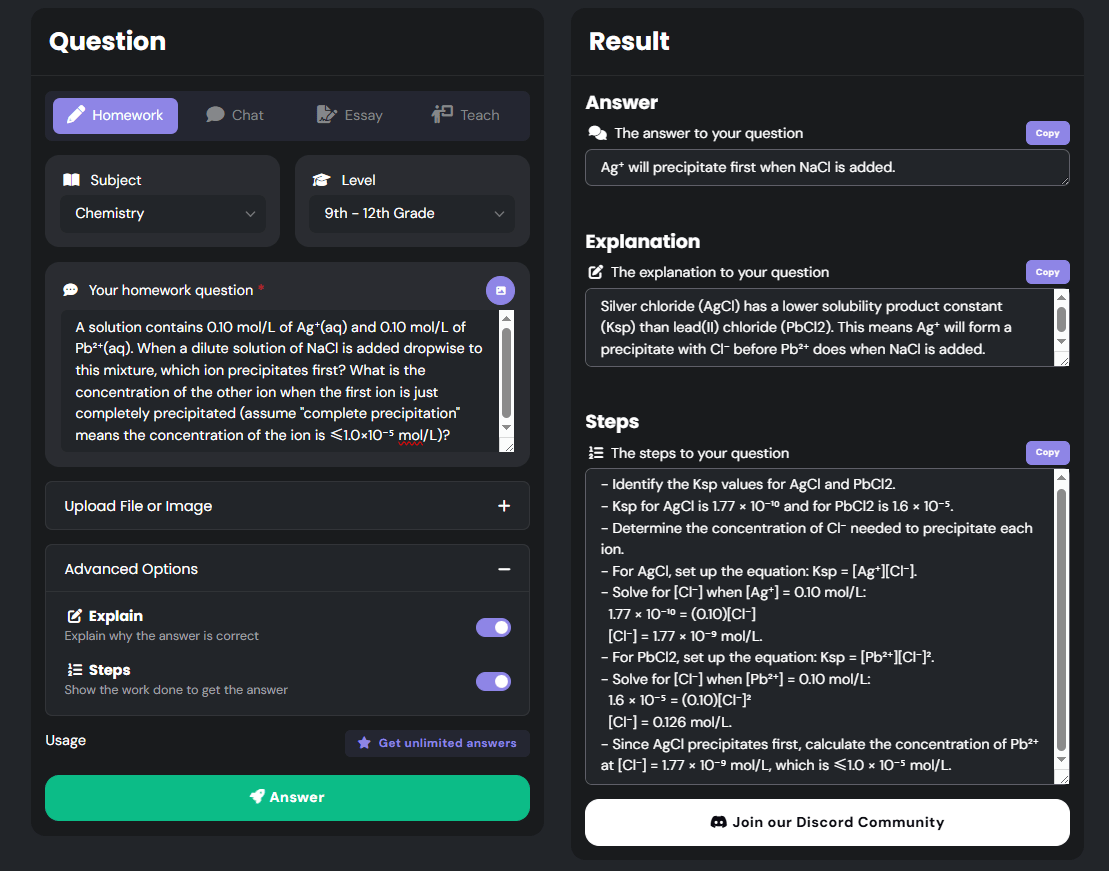
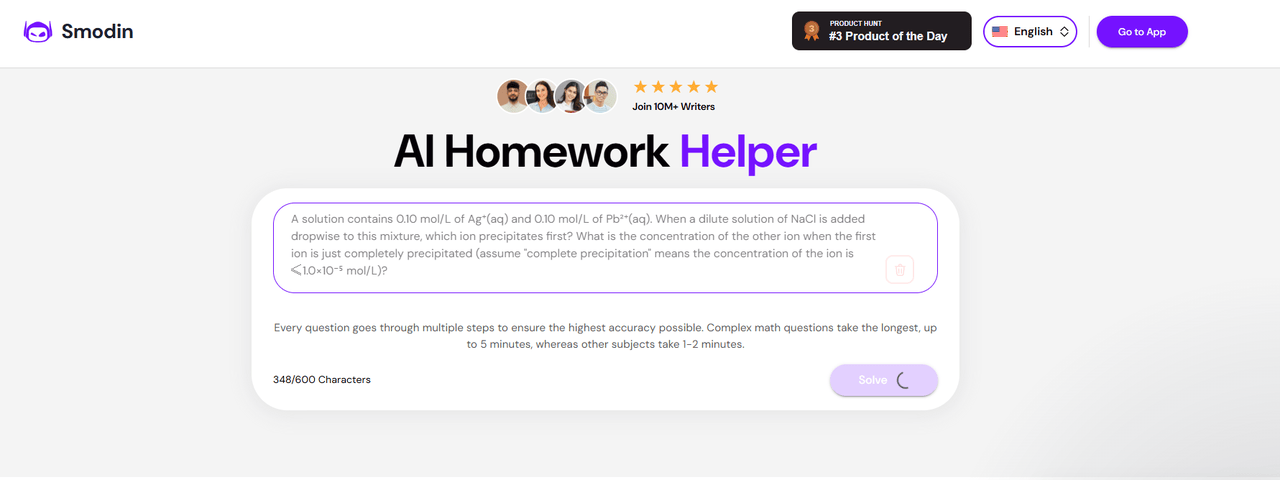
Smodin AI Chemistry Solver – Reliable and Versatile Performance
Overview: Smodin is a multi-subject AI solver with a strong chemistry module. It provides quick answers with step-by-step clarity and supports multilingual learning.
Key Features:
- Supports both text and formula inputs
- Delivers balanced equations and solution reasoning
- Covers general, inorganic, and physical chemistry
Strengths: global, and user-friendly interface.
Weaknesses: Lacks specialized depth in advanced organic synthesis and slow response.
Pricing: Free tier with flexible upgrade options.
Side-by-Side Comparison of Chemistry AI
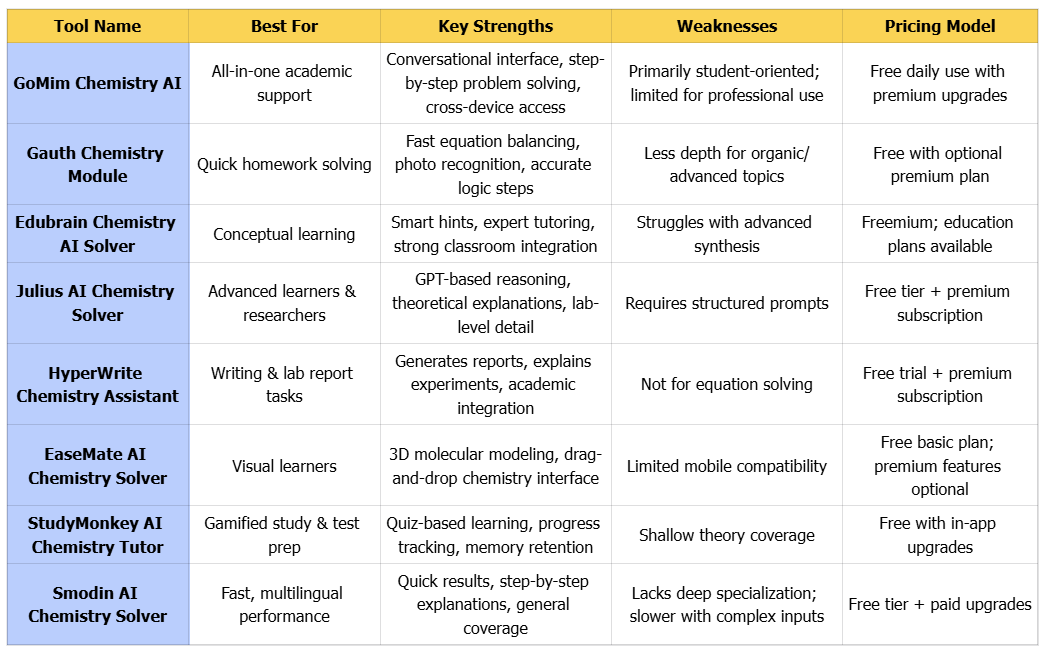
Each Chemistry AI tool has its unique strengths—and the best one for you depends on your learning goals. Whether you need instant answers, in-depth tutoring, or visual molecule modeling, today's Chemistry AI platforms cover every learning style.
Below is a quick comparison to help you decide which AI chemistry study tool fits your needs best:
Tips for Getting Better Results from Chemistry AI Tools
- Be specific: When entering an equation, include correct units and reactant states.
- Check your work: Always cross-reference AI answers with textbook examples.
- Use it as a tutor: Don't just copy results—study each step.
- Explore beyond answers: Ask "why" questions to uncover underlying principles.
- Combine with traditional study: AI enhances learning but shouldn't replace manual problem-solving.
Limitations, Risks & Ethical Considerations
While Chemistry AI study tools are powerful, they are not infallible.
- Some systems may misinterpret symbols or fail to account for complex thermodynamic variables.
- Overreliance on AI could limit problem-solving creativity.
- Students should use these tools responsibly, ensuring academic integrity and understanding each step before submission.
- Ethically, AI should complement—not replace—the learning process.
Conclusion
Chemistry AI tools are reshaping how students learn, making complex reactions and equations easier to understand. Whether you prefer visual learning, step-by-step explanations, or quick problem-solving, each platform offers unique strengths to fit different study needs. Choosing the right tool can turn chemistry from a challenge into an engaging, rewarding experience.
FAQ
What is the best AI chemistry solver for students?
The best AI chemistry solver depends on your learning style. GoMim Chemistry AI is ideal for all-around study support, while tools like Gauth and Smodin focus on fast, accurate problem-solving.
Are AI chemistry solvers suitable for advanced topics?
Yes, some platforms like Julius AI and Edubrain offer in-depth reasoning for organic and physical chemistry, making them useful for university-level learners.
Can AI tools help with lab reports or research writing?
Absolutely. Tools like HyperWrite specialize in chemistry-related academic writing, helping students summarize experiments and structure reports clearly.
Are AI chemistry tools free to use?
Most AI chemistry solvers provide free basic access, with optional premium upgrades for advanced features such as detailed explanations or visualization tools.
How do AI chemistry solvers improve learning?
They simplify theory, offer instant feedback, and provide step-by-step guidance—allowing students to understand not just the "what" but also the "why" behind chemical reactions.
Recent Posts

Discover the top free AI math solvers of 2025. Compare online maths solvers with steps, photo input, and powerful tools to help with homework and exam
Gemini 3 delivers major upgrades over Gemini 2.5 with stronger reasoning, richer multimodal understanding, and improved learning support across tasks.
Stuck on a calculus problem at 10 PM? Frustrated by math tools that only give you answers—without explaining how to get ...Try it free now
In today's digital age, selecting the right mathematical tool is essential for students, educators, and professionals al...Try it free now
Whether you're new to GoMim or have been using it for a while, you may not have fully explored everything it can do. GoM...Try it free now
IntroductionMathematics can be challenging, but with the rise of artificial intelligence, solving complex problems has b...Try it free now
Table of Contents

Your Personal AI Math Tutor
instant problem-solving, step-by-step explanations, personalized learning paths, and visual aids
AI Math SolverLearn math smarter on GoMim
Try GoMim Free - The Most Advanced AI Math Solver!
Join thousands of students using GoMim for math learning and problem -solving.